Ubud sits inland in central Bali, in Gianyar regency, on the rising ground between Denpasar and the volcanic interior. There's no coast here at all. What the land does instead is fold: rivers have cut steep gorges through the plateau, and everything between them is terraced rice, standing forest and villages that have grown into each other until the boundaries only matter to the people who live in them.
The town has been Bali's arts centre since the 1930s, when the Ubud royal family backed the painters' association Pita Maha. That history still runs the place. Painting museums, dance in the temple courtyards, and the craft villages strung along the road south.
You're a couple of hundred metres above the sea, so it's cooler than the coast and it rains more. Mist sits in the valleys until mid morning and the greenery everyone comes for is the direct result of the weather nobody mentions.
For a buyer, Ubud is the inland case. Gorge and rice-field frontage rather than ocean view, a guest who stays longer and comes for wellness and culture, and a calendar that doesn't rise and fall with swell season.
Around Ubud
Eat & drink
The two streets running south off the main road are where the eating happens, end to end, and they've held that job for as long as people have been coming here. Warungs and open-front places sit shoulder to shoulder along both. The individual names turn over. The streets don't.
A village on the ridge west of Campuhan, reached by a long flight of steps up from the road. Painters settled this side of Ubud in the 1960s and it kept the character: lanes too narrow for cars, rice fields between the houses, and places to eat that you walk to rather than drive.
See & do
Old forest in Padangtegal at the southern end of the centre, owned and run by the village. Balinese long-tailed macaques hold the ground, and so do temples that have stood since around the fourteenth century, including the Shiva temple Pura Dalem Agung Padangtegal. Mossy stone, banyan roots, stairs dropping into the ravine.
A paved spine along a ridge west of the centre, with a branch of the Wos river falling away on either side. The branches meet at Campuhan below Pura Gunung Lebah, a confluence Balinese Hindus treat as auspicious and the reason a temple has stood there far longer than the town has. Walk it early, before the heat lands.
The royal family's compound at the main crossroads, carved gates and courtyards opening straight onto the street. The Ubud princes who lived here backed the painters' association Pita Maha in the 1930s, which is the single decision that turned an upland village into Bali's arts town.
The Elephant Cave, east of the centre near Bedulu. A cave mouth cut as a fanged face, a meditation chamber behind it, and a bathing complex of stone figures below that stayed buried until the twentieth century. Hindu and Buddhist carving side by side, dated to the Bali kingdom around the eleventh century.
Terraced valley sides north of Ubud, stepped down to a stream and watered by subak, the farmer-run irrigation system UNESCO lists as a cultural landscape. Green year-round but never the same green twice, since neighbouring subak plant to a shared schedule and the fields cycle from flooded mirror to harvest stubble.
Bali's longest river runs a gorge along the western side of Ubud, past Sayan and Kedewatan, and it's why that flank of town is all steep drops and canopy. Rafting works the rapids at the bottom. From above, the gorge is what most of the west-side villas are actually looking at.
Properties in Ubud
 1/16
1/16Modern 4-Bedroom Luxury Villa in Ubud
4 Bed · 6 Bath · 928 m² · Leasehold
IDR 23,200,000,000
IDR 25,000,000 / m² land29 yr leaseYellow zone
 1/12
1/123-Bedroom Villa in Ubud
3 Bed · 3 Bath · 800 m² · Freehold
IDR 16,790,000,000
IDR 21,000,000 / m² landFreeholdYellow zone
 1/18
1/184-Bedroom Charming Villa in Ubud
4 Bed · 5 Bath · 600 m² · Leasehold
IDR 9,899,450,000
IDR 16,500,000 / m² land25 yr leaseYellow zone
 1/12
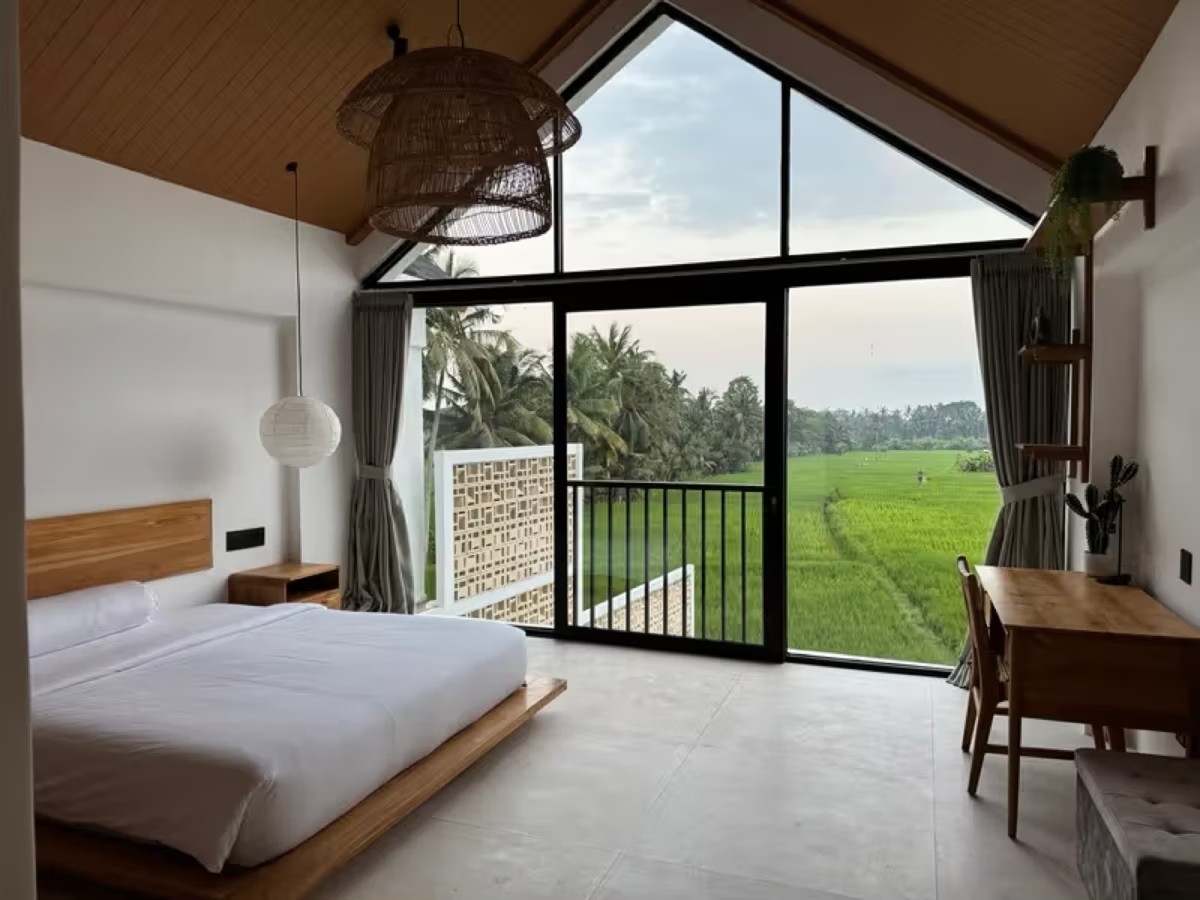
1/12European-Style 2-Bedroom Villa with Ricefield Views in Ubud
2 Bed · 3 Bath · 175.5 m² · Freehold
IDR 5,700,000,000
IDR 32,500,000 / m² landFreeholdOrange zone
 1/11
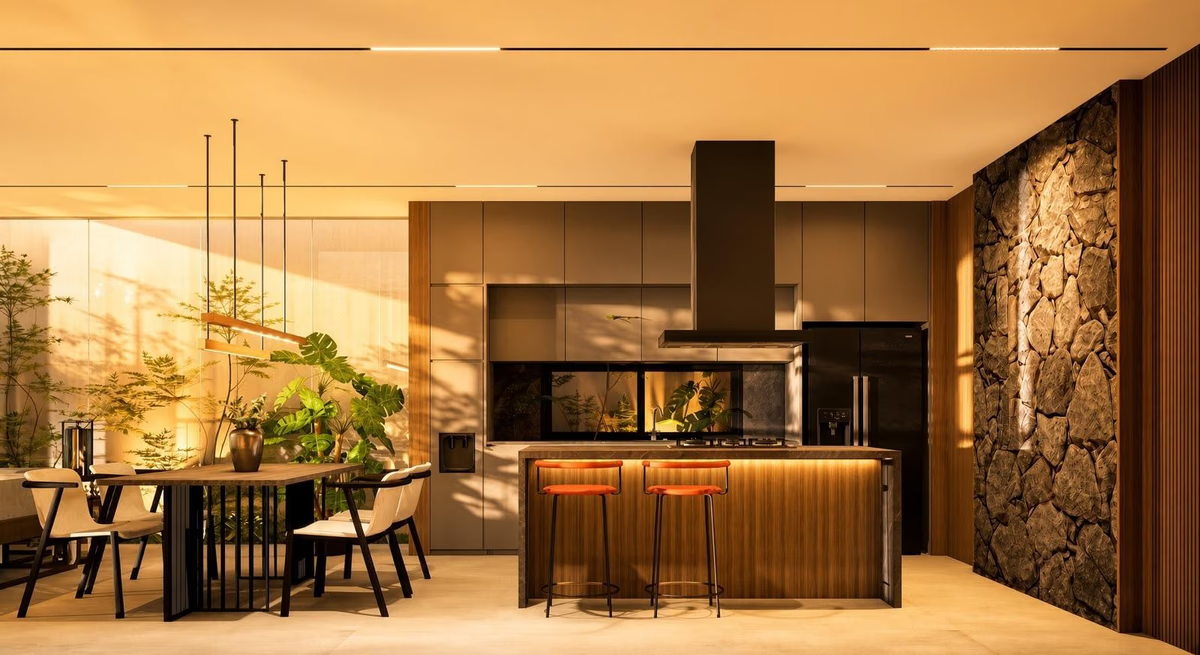
1/11Modern Tropical 2-Bedroom Villa in Ubud
2 Bed · 3 Bath · 147 m² · Leasehold
IDR 4,000,000,000
IDR 27,200,000 / m² land28 yr leaseYellow zone
Why buyers look at Ubud
Ubud draws a different guest from the coast. Stays run longer, the draw is wellness, culture and green space, and demand doesn't track surf season the way a beach area's does. Views and privacy come from the topography here, so what a plot faces is what it's worth: a gorge, a river bend, an unbroken run of terrace.
Be clear about what we are on this side of the island. Yolla builds, sells and manages on the Bukit, and we don't run an operation on the ground in Ubud. Inland we work as an agency, our own legal team handles the transaction work, and any rental figure we quote comes from villas we actually manage.
Who Ubud suits
Every view here is inland: terrace, gorge wall, canopy, and the mist that sits in the valleys until mid morning. Buyers who measure a villa in ocean frontage should stay on the coast. Buyers who'd rather wake to a river they can hear and not see tend to stop looking once they've spent a week up here.
Ubud has been an arts town since the 1930s and a wellness destination for decades on top of that, so the guest who books here often books for weeks. Retreat programmes, studios and a walkable centre full of practitioners do the work a surf break does on the Bukit. Steadier calendar, quieter house.
Temples, dance in the courtyards, painting museums and the craft villages along the road south fill a week without anyone getting in the water. The trade is real: everything is a drive, the roads are narrow and slow, and there's no beach to fall back on when a plan collapses at ten in the morning.